Article drawn from Francesco Verginelli's workshop at the Third Ukulele International Conference – UIC 2025
Tuning the open strings correctly is not enough. A ukulele can read perfectly in tune on the tuner and then, as soon as the left hand starts pressing the strings down onto the frets, produce notes that are slightly sharp or slightly flat. This is where intonation stops being a routine gesture and becomes a design problem: fretboard geometry, string elasticity, action height, bridge position and even playing style all feed into the same result.
In the workshop "The Art and Science of Ukulele Tuning", presented at UIC 2025, luthier Francesco Verginelli builds this problem up from the ground and shows how he deals with it in practice. The path starts with equal temperament, runs through the calculation of fret positions and arrives at per-string compensation. At the heart of the method is a purpose-built intonation jig: an experimental tool that makes it possible to determine the bridge position before it is glued down.
Intonation concerns the whole fretboard
In everyday language "tuning" and "intonation" are often used interchangeably, but they describe two different problems. Tuning sets the frequency of the open strings; intonation checks whether the notes stay consistent when the vibrating length is changed by the frets. The check therefore has to cover the whole fretboard, not just the four opening notes.
The question affects every fretted string instrument, but on the ukulele it is particularly acute. The short scale length reduces the margin for error: a shift of a few tenths of a millimetre, negligible on a longer scale, can become audible. That is why constructional precision has to be paired with a verification system able to measure how the strings actually behave.
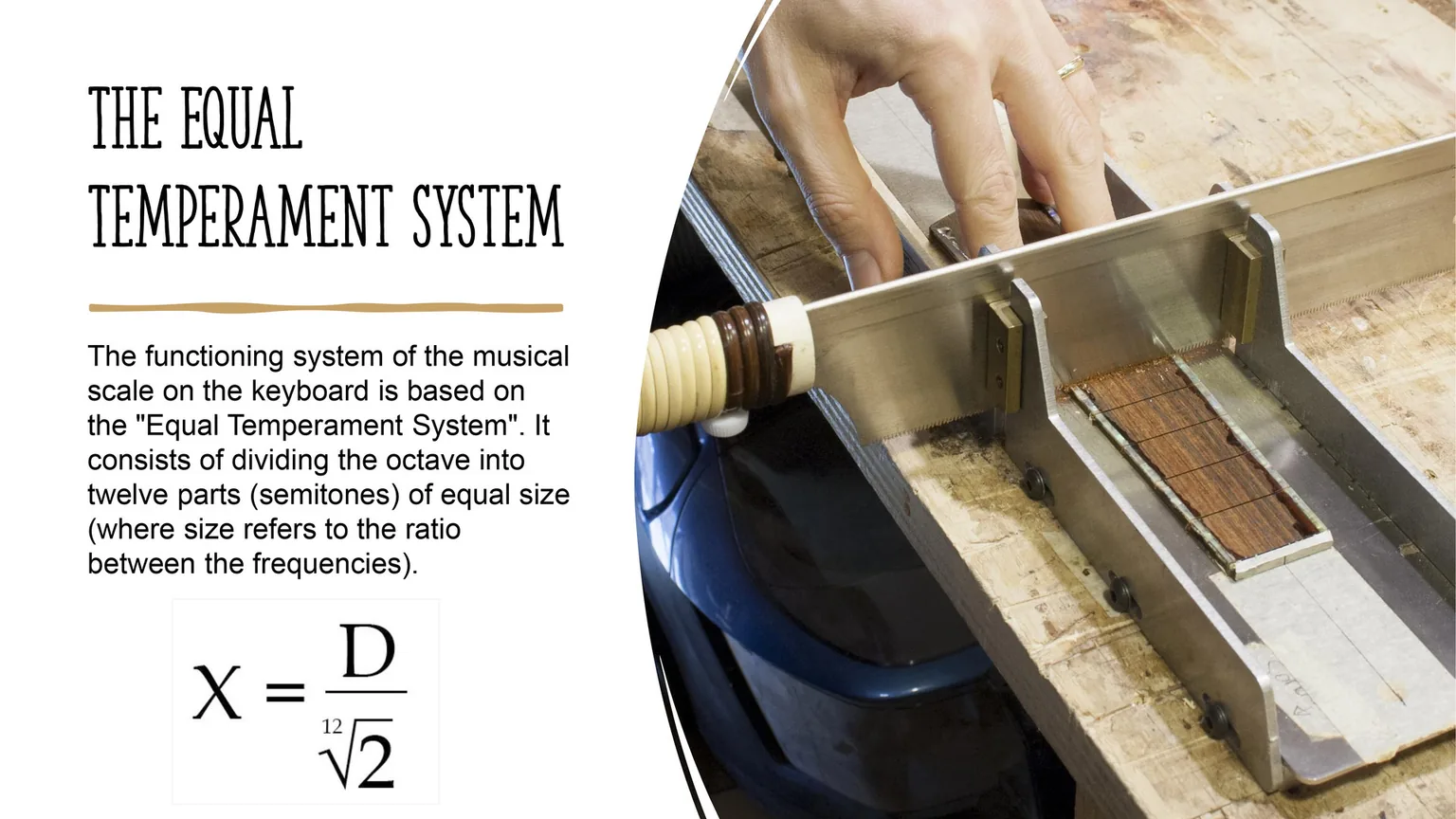
Figure 1. The Equal Temperament System governs fret placement for a given scale length.
Equal temperament: the mathematical map of the frets
Before talking about compensation we need to understand the rule by which the frets are placed. The modern fretboard uses equal temperament: the octave is divided into twelve equal semitones — equal not as linear distances, but as frequency ratios. The coefficient governing the step from one semitone to the next is the twelfth root of two, roughly 1.05946.
If D is the scale length, that is the length of the vibrating string between nut and saddle, the remaining length after the first semitone is found by dividing D by 1.05946. With a scale length of 349 mm the result is about 332.55 mm: that is the distance from the first fret to the saddle. Repeating the calculation on the new value gives 313.88 mm for the second fret, and so on. At the twelfth fret the vibrating length is exactly half the original, 174.5 mm, and the frequency doubles: the octave is reached.
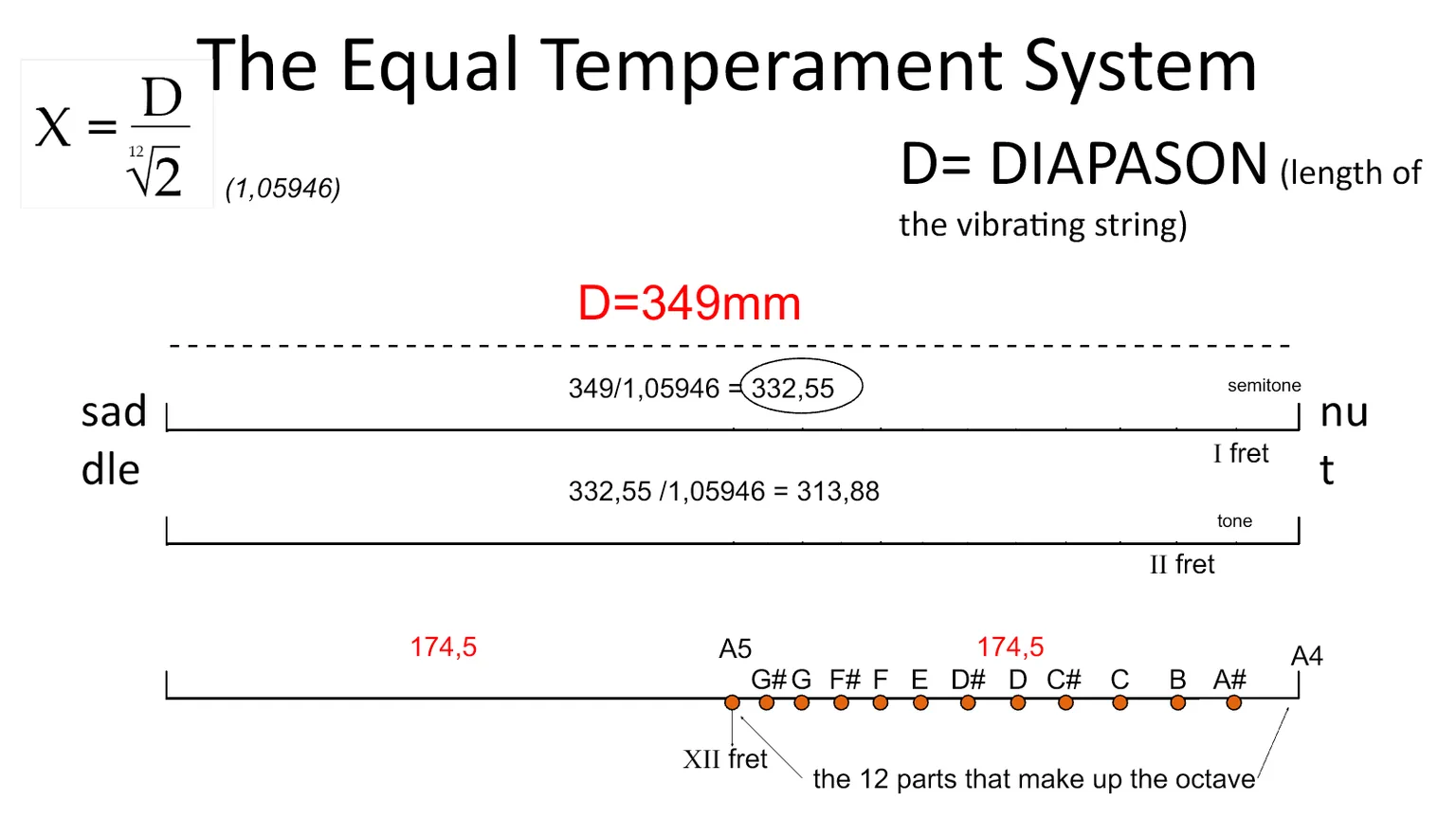
Figure 2. The diagram applies the equal temperament coefficient to a scale length of 349 mm.
The formula builds a consistent theoretical grid, but it does not remove every compromise. Equal temperament is itself a historical solution: it lets you play in every key without retuning the instrument, spreading the unavoidable differences from acoustically pure intervals evenly across the scale. In the historical outline Verginelli sketches, its definition matures between the 16th and 17th centuries through the contributions of theorists such as Galilei, Mersenne and Werckmeister, and settles in the 18th. As early as 1581, in the "Dialogo della musica antica et della moderna", Vincenzo Galilei was already addressing the practical need to temper intervals.
Key point. The mathematical position of the frets sets the frame of reference. Real intonation, however, depends on what happens when the string is pressed down.
Why a fretted note tends to go sharp
A string tuned to the correct frequency changes state when it is pushed against a fret. The pressure deflects it from its straight path, slightly increasing its geometric length and, above all, its tension. The rise in tension raises the frequency: the fretted note therefore tends to come out a little sharp. How large the effect is depends on the material and diameter of the string, on the action and on how hard the player presses.
The constructional answer is compensation, that is a small increase in the effective scale length. In the workshop example, around 3 mm are added to a nominal 349 mm scale. Lengthening the string lowers the frequency just enough to offset the sharpening introduced by pressure on the fret.
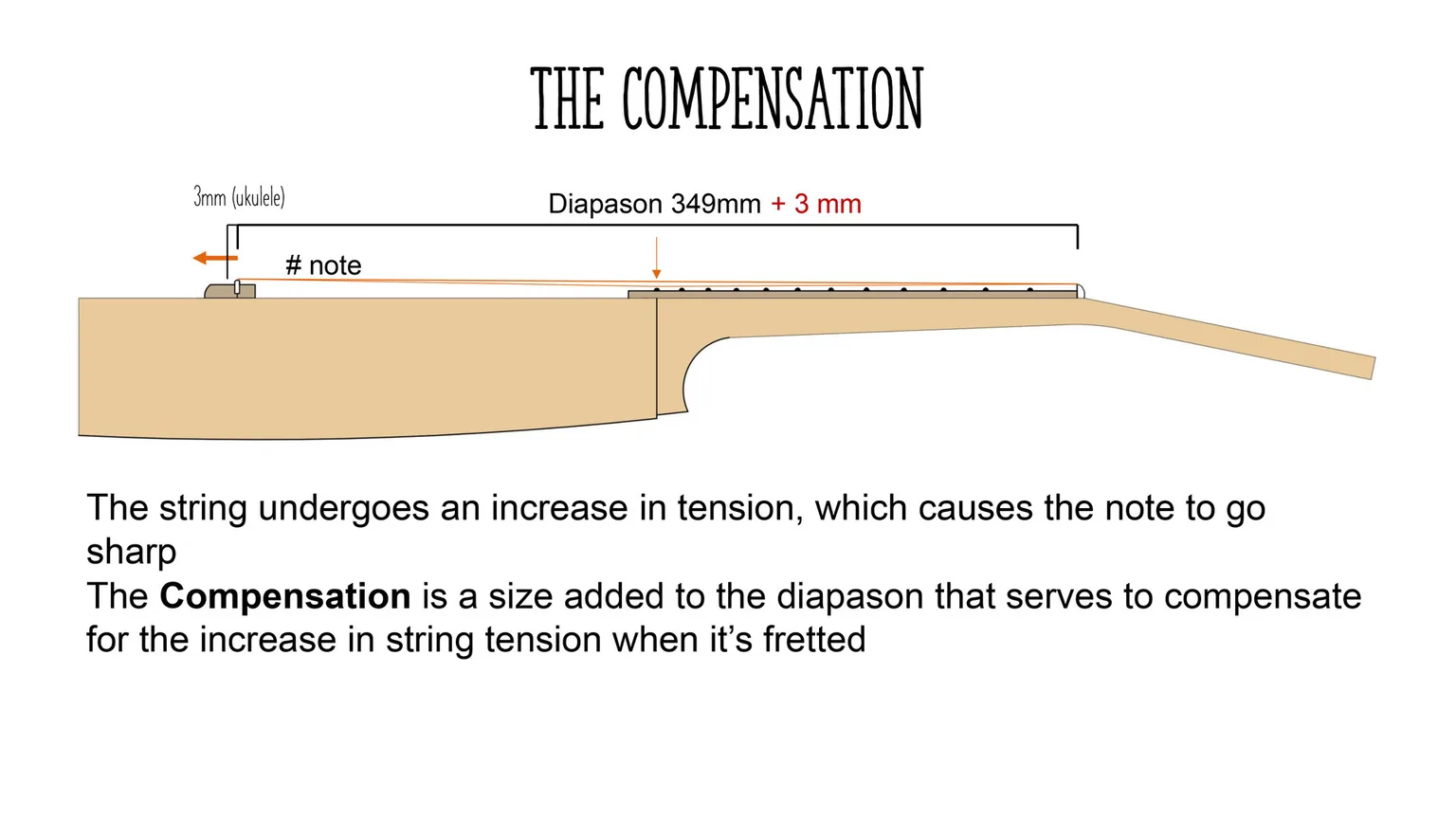
Figure 3. Compensation adds a small amount of length to the scale to balance the rise in tension of the fretted string.
A different compensation for every string
Setting the bridge back by a single amount is not enough, because the four strings do not react in the same way. Different gauges, materials and tensions call for slightly different corrections. Verginelli therefore works on the contact point of each string on the saddle: moving it backwards increases the vibrating length and lowers the note; moving it forwards reduces the compensation and raises the pitch.
The top profile of the saddle is thus not an arbitrary line. It becomes a calibrated sequence of bearing points, one per string. Thicker strings generally need more compensation. The differences are tiny — the working unit is the tenth of a millimetre — but musically significant on a short-scale instrument.
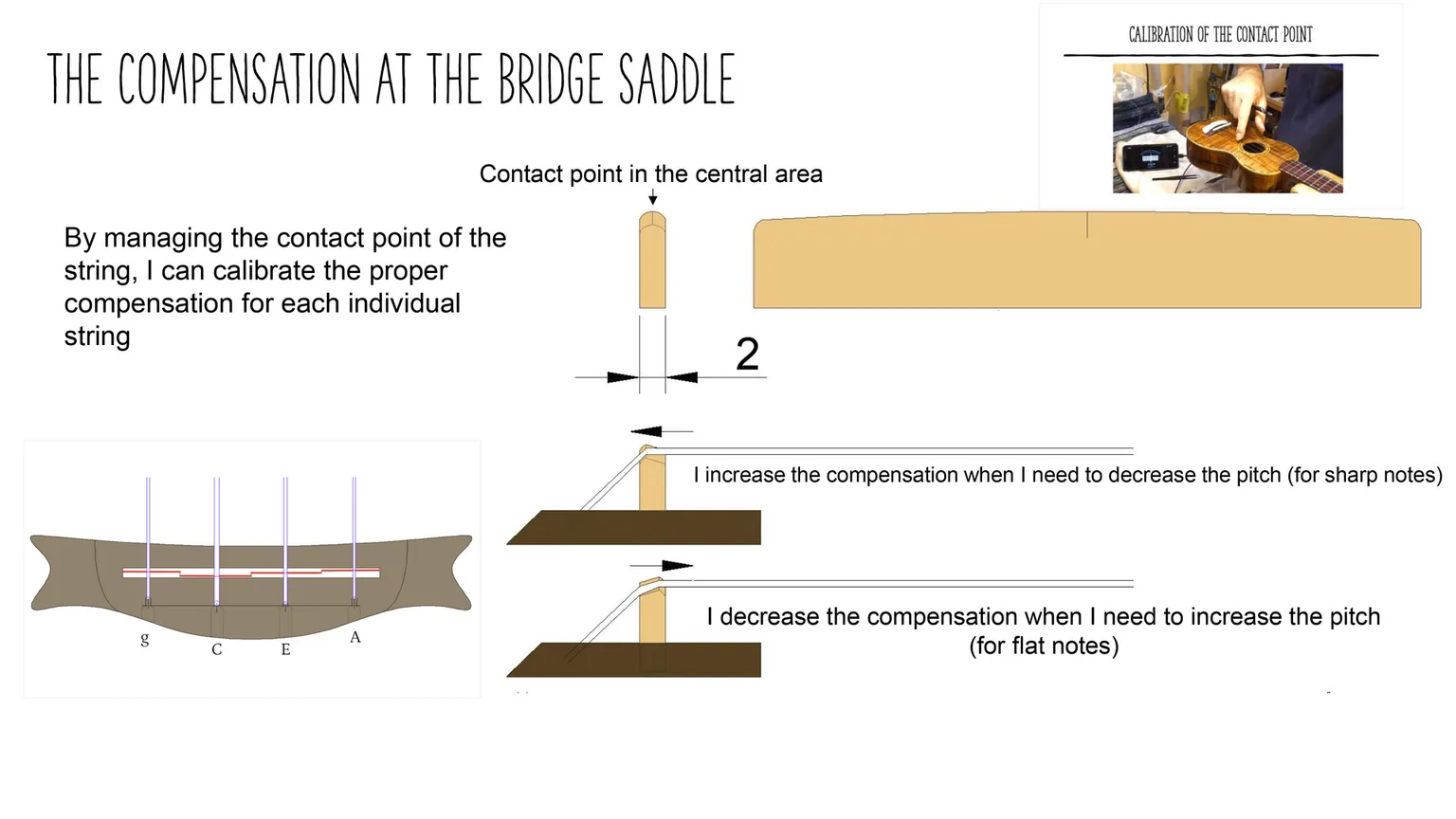
Figure 4. Front view of the bridge: the red line shows the differentiated contact points for the g, C, E and A strings.
The decisive moment: placing the bridge
During the final setup the luthier still has a little room for manoeuvre. A saddle about 2 mm thick allows the contact point to be refined, checking each string with the tuner and reshaping the top. But the more important decision comes earlier: deciding where to glue the bridge. Once fixed to the soundboard, it cannot be moved without invasive work.
Compensation therefore has to be anticipated before glue-up. Mechanically adding a standard figure to the scale length is not enough, because the result varies with the string set, the instrument's configuration and the action. The player's technique adds a component that cannot be predicted exactly either. The realistic goal is to find the best balance within a musically acceptable tolerance.
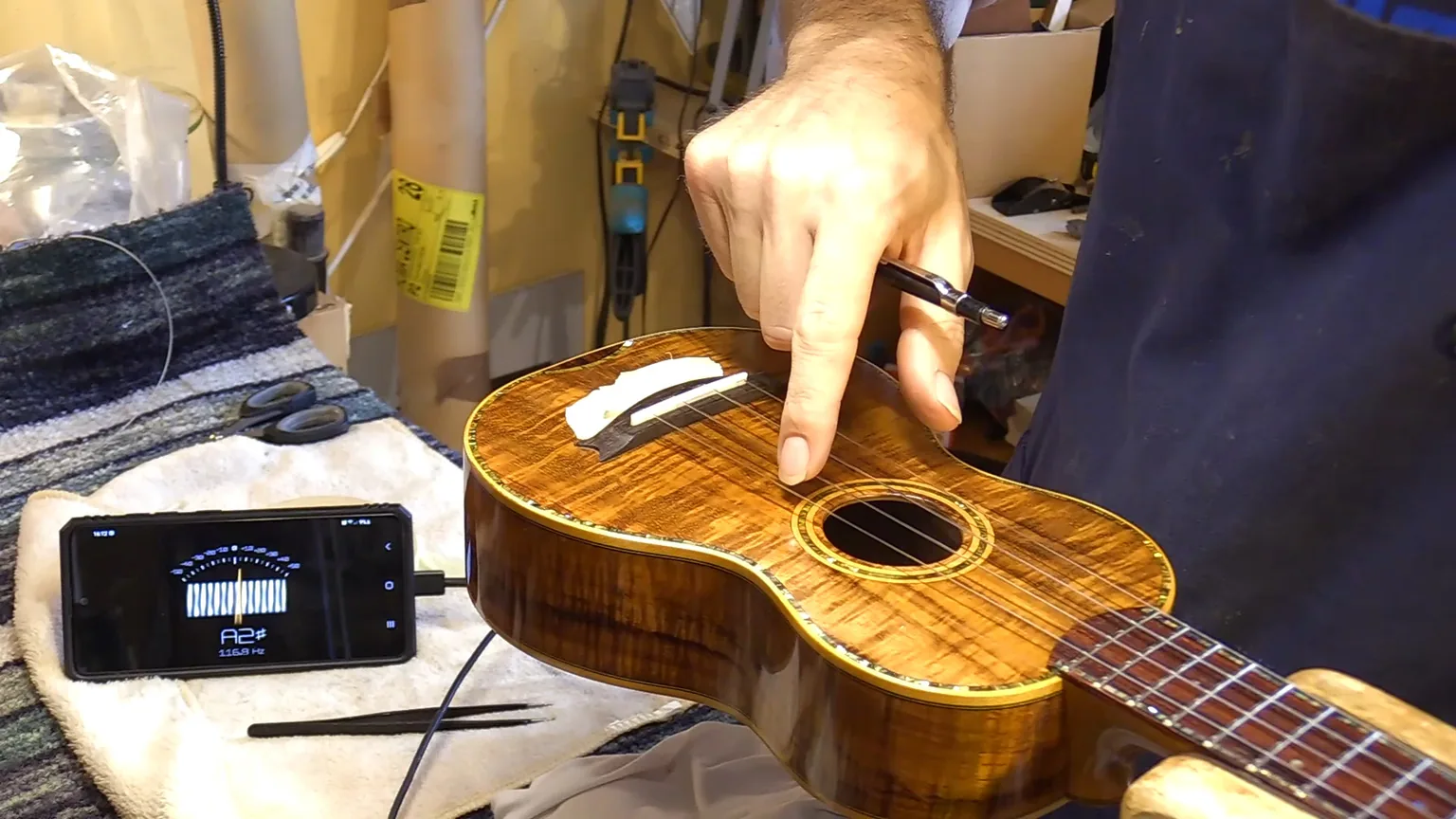
Figure 5. Calibrating the contact point on the saddle with the help of an electronic tuner.
The intonation jig: measuring before gluing
To turn these variables into a concrete measurement, Verginelli built an intonation jig. It is a kind of laboratory instrument in which both the twelfth fret and the saddle can be moved. The jig simulates the behaviour of a real ukulele, but keeps adjustable exactly those elements that, on the finished instrument, will become permanent.
The procedure starts by choosing the scale length to be tested and placing the twelfth fret at its exact midpoint. The intended string set is then fitted and, through successive intonation tests, the saddle is moved until the correct bridge position and compensation value are found.
To establish the overall bridge placement it is enough to check the strings that represent the musical extremes of the set; the compensation of the intermediate strings will fall between those values. The jig thus makes it possible to try different combinations of scale length and strings without relying solely on a theoretical figure or on an after-the-fact correction.
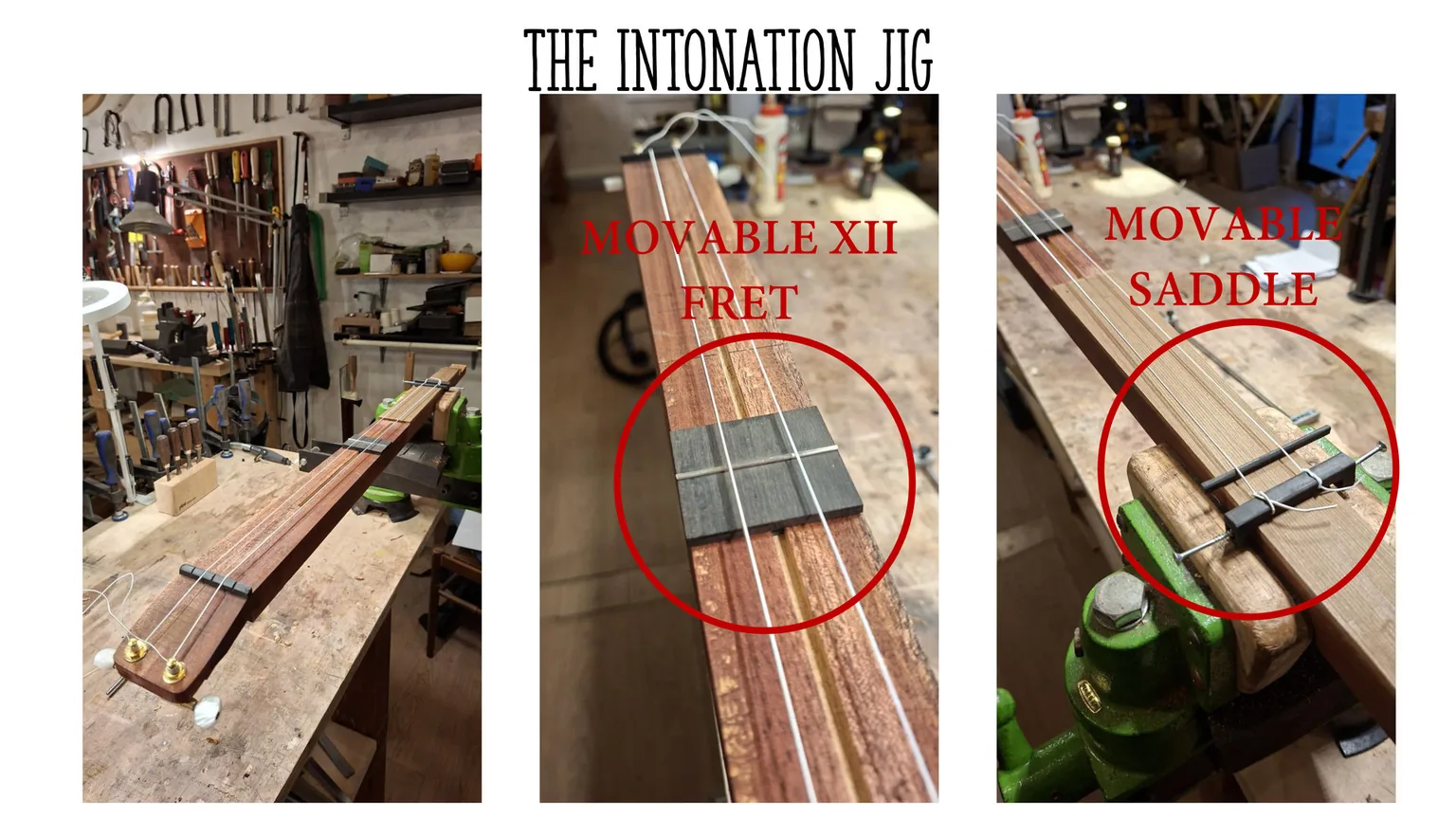
Figure 6. The intonation jig built by Verginelli, with movable twelfth fret and saddle.
The test at the twelfth fret
The final check compares two sounds produced at the same point of the scale. The first is the natural harmonic at the twelfth fret, obtained by lightly touching the string: it divides the vibrating length in half in the ideal case, without introducing the rise in tension caused by pressure. The second is the note actually fretted at the twelfth. When the two frequencies coincide, or are close enough to sound in unison, the intonation can be considered correct.
If the fretted note is sharp relative to the harmonic, compensation has to be increased and the string therefore lengthened. If it is flat, compensation has to be reduced. The check needs to be repeated carefully, because a minimal change in the contact point can alter the result.
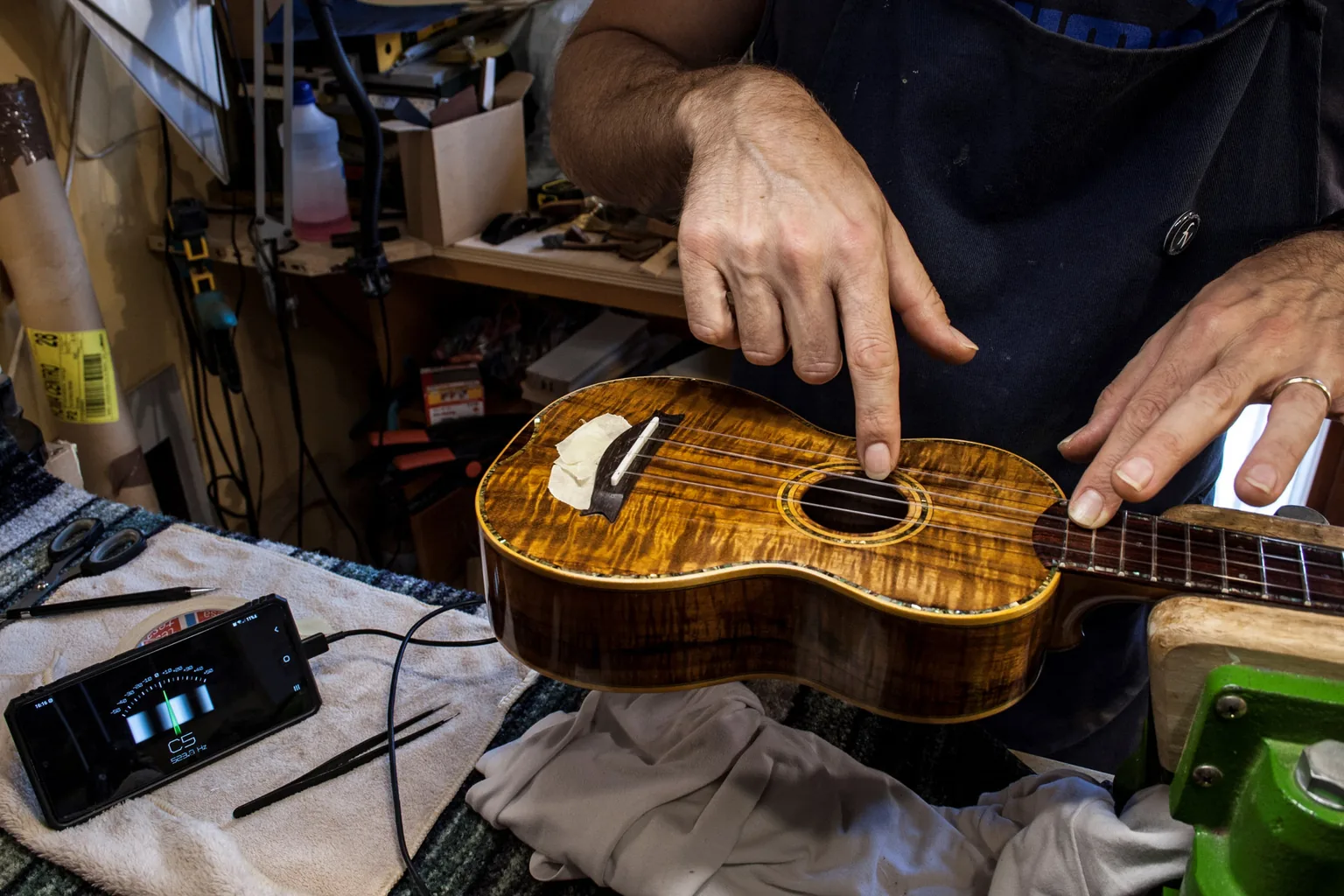
Figure 7. Comparing the harmonic and the fretted note at the twelfth fret is the practical reference for judging intonation.
Attainable precision, not abstract perfection
The method does not promise absolute mathematical perfection. Traditional instruments work within compromises: equal temperament spreads the differences across the intervals, real strings are not ideal elements and every player applies a different pressure. Even two nominally similar sets can react in slightly different ways.
Quality then comes from being able to bring the deviations into a zone the ear accepts as stable. It is a less spectacular definition than "perfection", but a far more useful one. The mathematical design supplies the map; the jig measures the real behaviour; the work on the saddle refines the result on the individual instrument.
Where art and science meet
The title of the workshop sums up Verginelli's method well. The science lies in the relationship between frequency and vibrating length, in the equal temperament coefficient and in measuring to a tenth of a millimetre. The art lies in reading materials and variables, in choosing the right compromise and in translating an instrumental check into a musical answer.
The intonation of a ukulele therefore does not hang on a single detail, but on a chain of consistent decisions: placing the frets correctly, anticipating compensation, positioning the bridge on the basis of real tests, shaping the contact point of each string and finally checking the unison at the twelfth fret. When that chain works, the player can move along the fretboard without having to fight the instrument.
For anyone who wants to look deeper into the building process, Verginelli points to the volume "Diario di costruzione di un ukulele soprano", which documents the stages of handmade construction with images and technical drawings. The closing message, though, remains accessible without setting foot in a workshop: good intonation is not a given. It is the result of theory, experiment and listening.
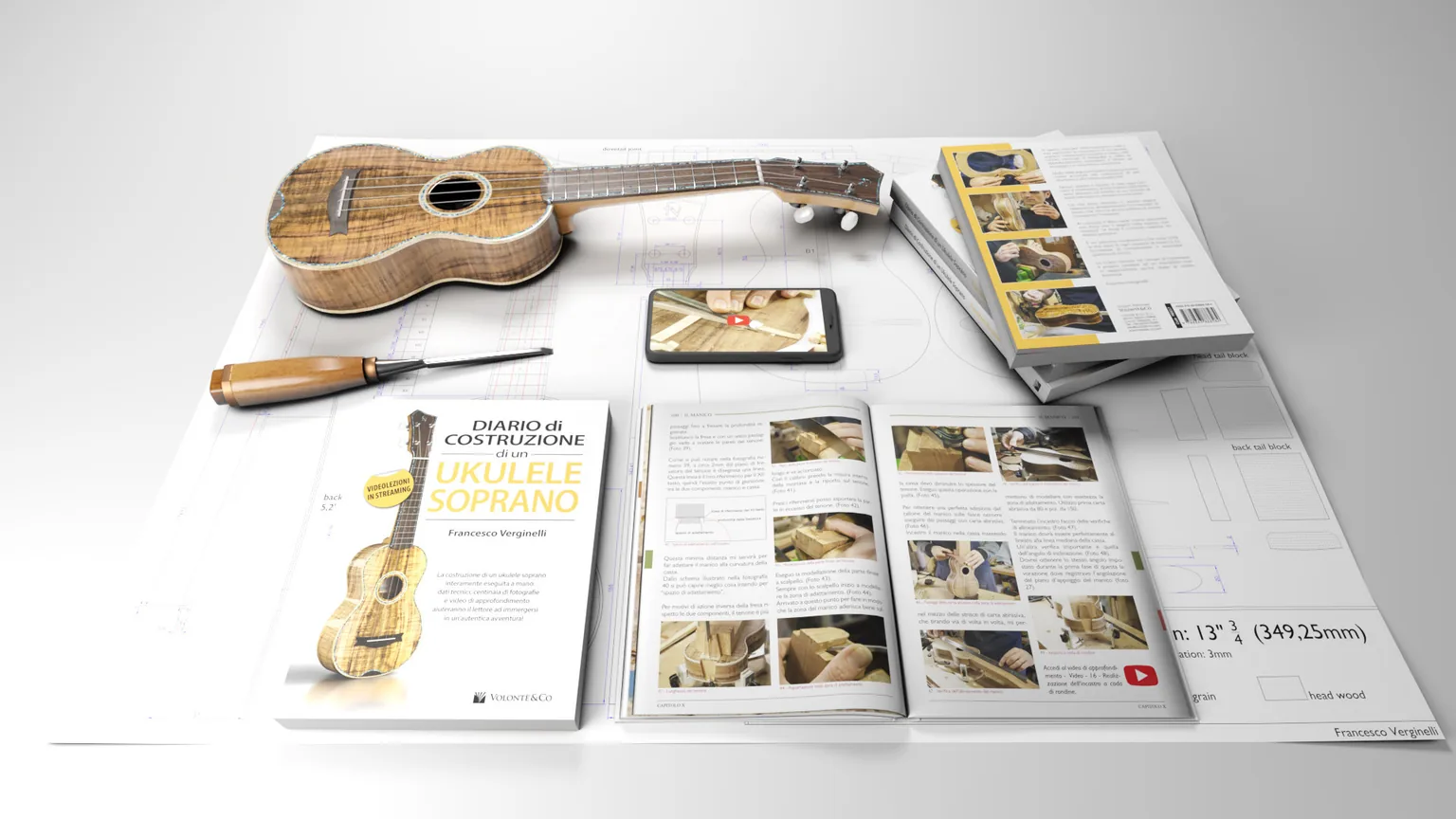
Figure 8. "Diario di costruzione di un ukulele soprano", Francesco Verginelli's book on the building process.